
1926
When she died, many were already acclaiming her a saint.
When Suzanne Aubert died on 1 October 1926, many were already acclaiming her a saint. The Sisters of Compassion were encouraged by roman officials and others to collect relevant information about her life and virtues.

1926
A letter from Cardinal Gasquet reflected the high regard for Suzanne and hope for her beatification process.
A letter dated 10 December 1926, from Cardinal Gasquet to Mother Cecilia who had succeeded Suzanne Aubert, showed the esteem in which was Suzanne was held by dignitaries in Rome. Cardinal Gasquet wrote he hopes he is spared to witness at least the initial stages of the process of her beatification.



1988
Suzanne was honoured in the Anglican Church’s Book of Common Prayer as a saintly woman.
Although she died in 1926, Suzanne Aubert’s name, and the work she started, lives on. Since 1988 the New Zealand Anglican Church has placed her in their Book of Common Prayer calendar as a saintly woman.

1997
The New Zealand Bishops’ Conference supported the first step toward her sainthood.
A formal process is required for the Catholic Church to recognise Suzanne Aubert as a holy person or saint. In 1997 the New Zealand Bishops’ Conference readily agreed to support the first part of the process, the “Introduction of the Cause of Suzanne Aubert”. The publication of her biography was another step in the process. There also needs to be a study of her ‘virtues’, which will be revealed from studying her own writings.

2026
Evidence and witness accounts continue to be collected and reviewed in Rome.
Besides this, there have been many prayers through the intercession of Suzanne Aubert, requesting cures and miracles. Evidence must be collected, and witnesses examined to verify a miracle attributed to her. When sufficient proof of her sanctity has been gathered, this is then sent to the Church authority in Rome, who will examine what has been submitted, and decide whether to proclaim Suzanne Aubert as a holy person.


1990
The Sisters approached Cardinal Williams to begin the process toward sainthood.
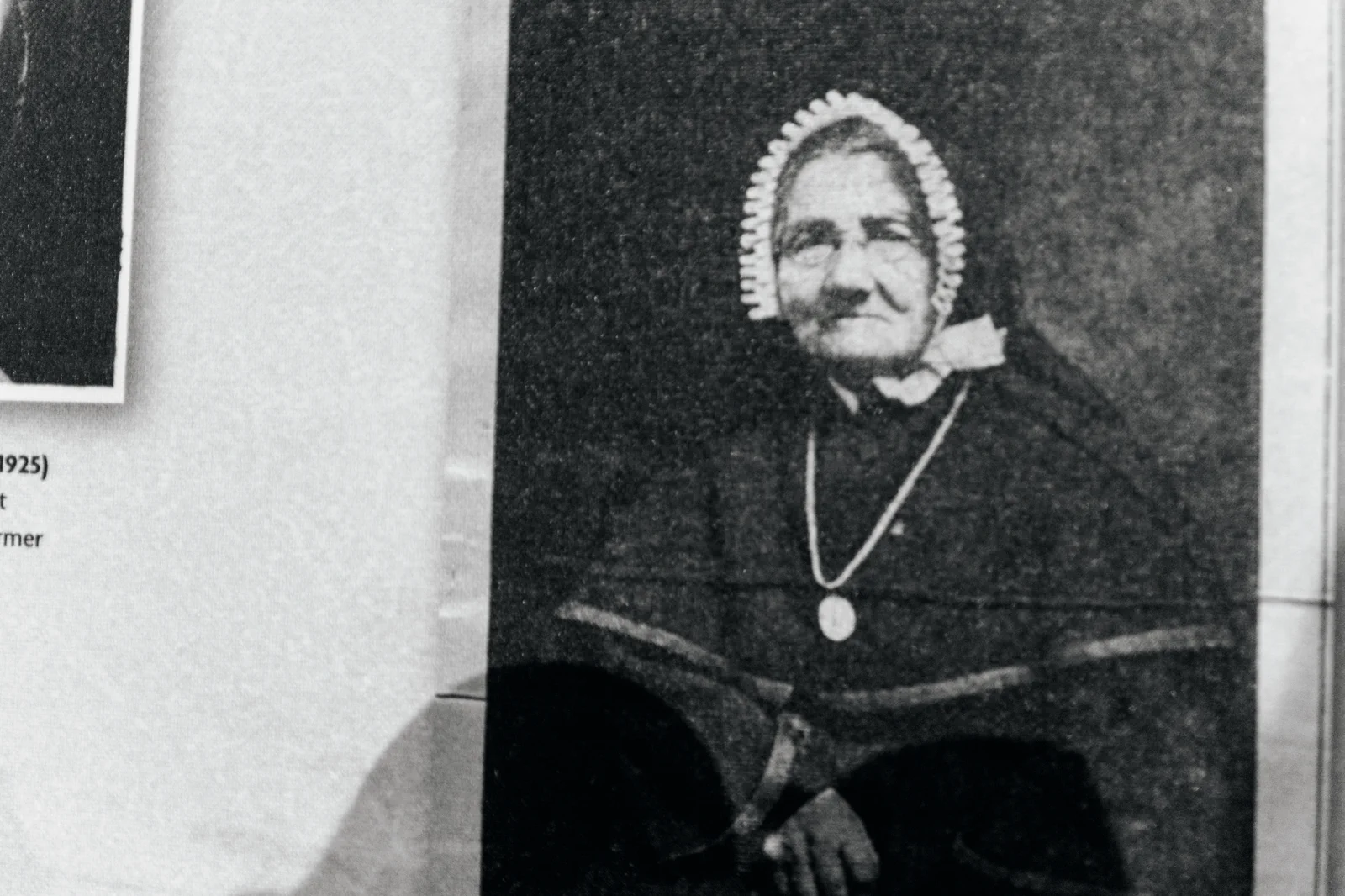
According to the procedure, the bishop must give permission for the cause to start. The Sisters of Compassion approached Cardinal Williams early in 1990. A postulator was appointed, and it was her task to help to “Conduct thoroughly the investigations into the life of Suzanne Aubert”, in order to “establish her reputation of sanctity the importance of the cause for the Church and the importance of Suzanne Aubert as a role model of holiness for the people of Wellington and New Zealand”. At this stage, nothing could be done until an authentic biography had been written about Suzanne Aubert.

1992
Jessie Munro was appointed to write Suzanne’s biography during the Sisters’ centenary year.

1996
The Story of Suzanne Aubert was completed.

1997
The biography received the Montana Book of the Year Award.
In 1992, the Centenary year of the Sisters of Compassion, Jessie Munro was appointed to write the biography of Suzanne Aubert, The Story of Suzanne Aubert. The book was completed in 1996 and received the Montana book Award of the year in 1997.

1997
The bishops agreed to begin Suzanne’s path to sainthood and introduced a prayer for her intercession.
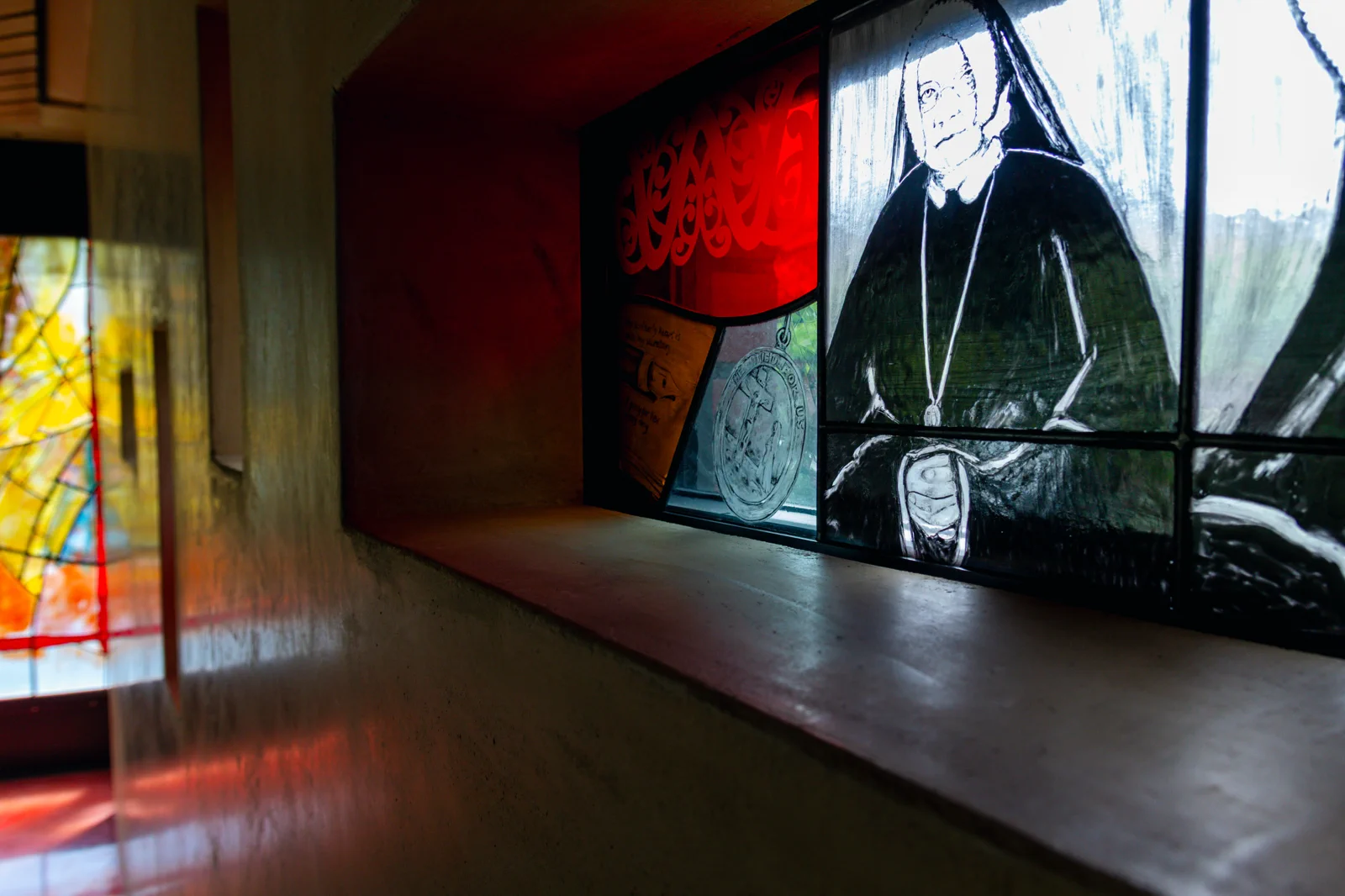
At the New Zealand Catholic Bishop’s Conference in 1997, the bishops agreed to support the first part of the process – The Introduction of the Cause of Meri Hōhpea Suzanne Aubert. A special prayer was composed for people to recite, that through her intercession graces, favours, or special help would be received. The bishops have to be asked before any Cause can proceed because the person has to have relevance for the whole country. Suzanne’s work for those who were most in need, regardless of their religion first in Auckland and later in Wellington, her efforts for Māori people in Hawkes Bay and on the Whanganui River, and her healthcare provisions and research into herbal medicine, make her such a person.
2001
The Sisters approached Cardinal Williams to begin the process toward sainthood.
2003
Permission was received to proceed with a Diocesan Inquiry
All relevant material accumulated since the time of Suzanne Aubert was sorted and a brief summary of this was sent to the cardinal in 2001. Because Suzanne Aubert spent seven years in Rome, the Cardinal asked the Vatican if they had any material about Suzanne Aubert. They did, and this was sent to him on 14 May 2003.
On May 14, 2003, permission was received to proceed with a Diocesan Inquiry. Theologians were appointed to examine published works of Suzanne Aubert and state that these were in accord with the Christian faith.
Historians were appointed to examine her life, works and unpublished writings in the context of her time and write a report on this. Her letters were examined to see what they revealed of her personality, her actions to assist the needy, and how other people at the time wrote about her and then her relevance for today. Yes, she did great work in her time, but nowadays, would people still consider her actions to be good? Was she just a do-gooder? Was she just promoting herself? Was she patronising to the people she helped? All those things had to be researched by those skilled to do so.
A promoter of justice was appointed, and it was this person’s task to see that any failings in the proposed saint’s character were not glossed over. The process is very thorough to prevent abuse from happening. It would be terrible to name someone a saint and then discover they had a murky past.
Some people whose families had a special connection with Mother Aubert during her lifetime were spoken with and also others whose work has meant that they have useful knowledge of her. There have been cures during the last seventy years that those concerned attributed to Suzanne Aubert’s intercession with God. Whether these can be called miracles or not will be decided by the Vatican. Doctors checked existing medical records, to help the inquiry. Because Suzanne Aubert spent a great deal of time working with Māori in Pakipaki and along the Wanganui River, it was really helpful to the inquiry that their opinion of her life and work be obtained and that representatives of both groups thought so much of her they made the time to come to Wellington to say so. One kaumatua confronted the Church officials, wanting to know why calling Suzanne a saint had taken so long!
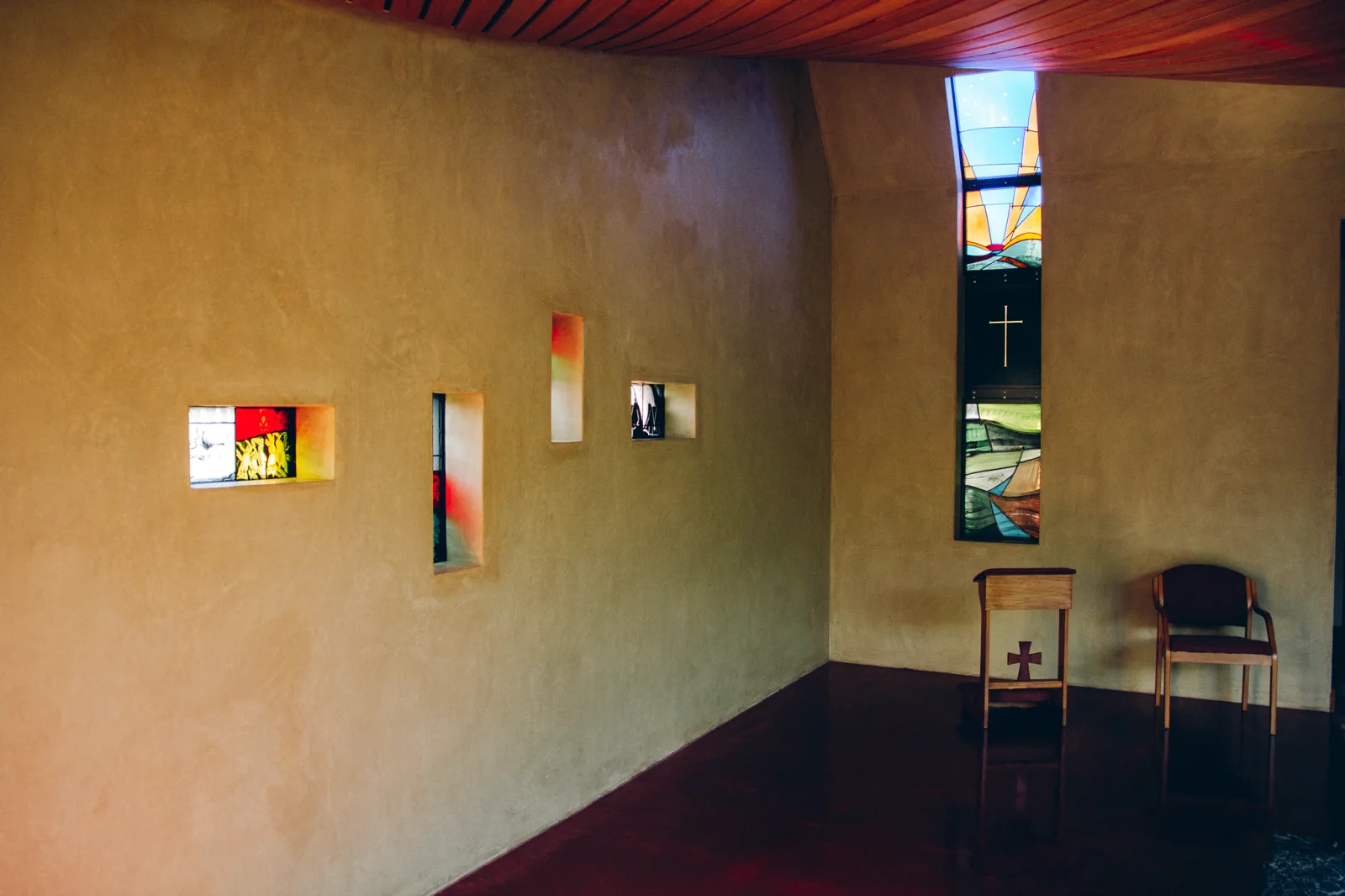
The Inquiry began with a public Mass in the Home of Compassion Chapel, to which all the clergy and people of the diocese were invited. After the closing session on July 4 when all documents were signed and sealed, there was a closing Mass in the Cathedral. To conclude all the documentation was sent to the Vatican for examination and an eventual decision on Suzanne Aubert’s sanctity.